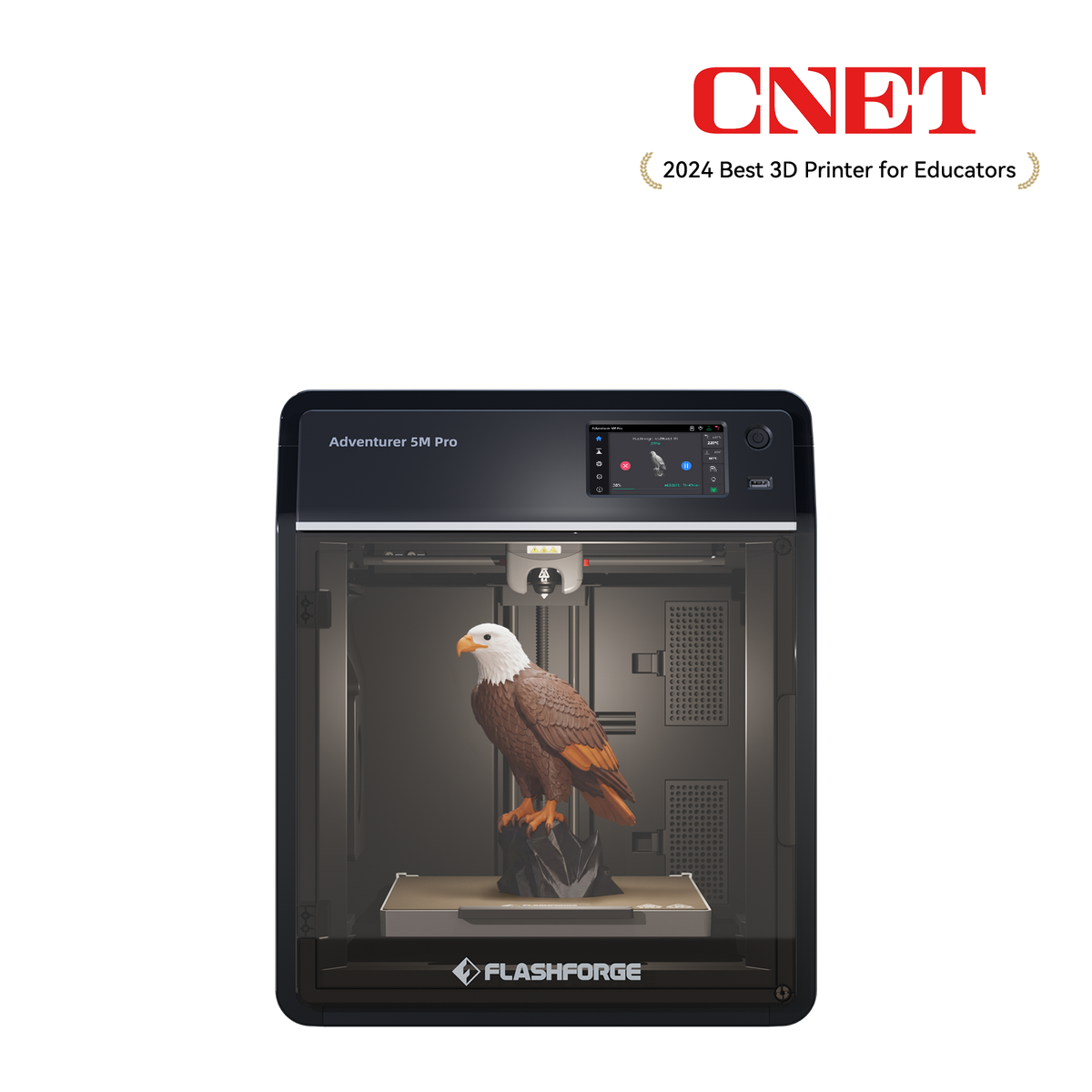
Our verdict: Classrooms, offices and small enclosed setups
Flashforge Adventurer 5M Pro
Enclosed compact CoreXY · Flashforge
A small enclosed CoreXY with a camera and Ethernet.
Best forClassrooms, offices and small enclosed setups
Key specs Manufacturer data
- Technology
- FDM, CoreXY, enclosed
- Build volume
- 220 × 220 × 220 mm
- Max speed
- 600 mm/s (travel)
- Max acceleration
- 20,000 mm/s²
- Max nozzle temp
- 280 °C
- Max bed temp
- 100 °C
- Extruder
- Direct drive
- Camera
- Yes
- Screen
- 4.3"
- Connectivity
- Wi-Fi, Ethernet, USB
- Machine size
- 380 × 400 × 453 mm
Why it stands out
- Enclosed, with camera monitoring
- Wi-Fi plus wired Ethernet
- Compact 380 × 400 mm footprint
Trade-offs
- 280 °C max nozzle temperature
- 220 mm build volume
Spec sources: flashforge.com
The headline specs
- Technology: FDM, CoreXY, enclosed
- Build volume: 220 × 220 × 220 mm
- Max speed: 600 mm/s (travel)
- Max acceleration: 20,000 mm/s²
- Max nozzle temp: 280 °C
- Max bed temp: 100 °C
- Extruder: Direct drive
- Camera: Yes
Spec sources: flashforge.com. Specs checked .
What stands out
Flashforge's specification table lists a 220 mm cube, 600 mm/s travel speed, 20,000 mm/s², a 280 °C direct-drive extruder and a 100 °C platform, with camera monitoring and Wi-Fi, Ethernet and USB. Wired Ethernet is uncommon at this size and helps in schools and offices.
Who it suits, who should skip it
- Best for: Classrooms, offices and small enclosed setups.
- Skip it if you want nylon or polycarbonate (280 °C is too low).
Recommended settings and materials
The Adventurer 5M Pro is happiest with the filaments its 280 °C nozzle handles comfortably: PLA, PETG, ABS, ASA and TPU. Flashforge's own profiles in Orca-Flashforge or Flashprint are a good base; keep the glass door open or the top removed for PLA, and closed for ABS and ASA with the bed at 90–100 °C. The 600 mm/s figure is a travel speed: printing moves are slower, and that is normal. Nylon and polycarbonate generally need more than 280 °C, so they are outside its comfort zone. If you print TPU, slow down and disable retraction tweaks you use for rigid filaments.
Temperature ranges are common starting points from filament and resin makers: always follow the label of the spool or bottle you use.
Typical projects
Typical projects for the 5M Pro are household and office parts in PETG, ABS or ASA enclosures and brackets that need more heat resistance than PLA, cosplay details and props that fit within 220 mm, and small batches of the same part printed overnight with the camera keeping an eye on them. Larger models can be split in the slicer and glued, but if most of your projects exceed 220 mm, a larger printer will save time.
Living with it: upkeep and running costs
Its 380 × 400 mm footprint makes it one of the easiest enclosed printers to place in an office or a bedroom-turned-workshop, and the enclosure keeps noise and smells down compared with an open frame. Wired Ethernet is a plus for reliable remote monitoring with the built-in camera. Plan for the usual consumables: nozzles (Flashforge's quick-swap design makes changes fast), a spare flexible plate and the air filter if you print ABS regularly.
Before you buy: checklist
- Check your filaments: anything that needs more than 280 °C is out.
- Measure the spot: 380 × 400 mm footprint and 453 mm high.
- Use wired Ethernet if your Wi-Fi is weak where the printer will sit.
- If you want multicolor later, consider the AD5X or a Combo machine instead.
Where to buy
| Merchant | Type | Link |
|---|---|---|
| Flashforge | no commission | Official store |
Other options
The 5M Pro's closest rival is the Creality K1C: both are compact enclosed CoreXY machines with a camera and 20,000 mm/s² acceleration, but the K1C's nozzle goes to 300 °C and its volume is slightly taller (220 × 220 × 250 mm against 220 × 220 × 220 mm). Flashforge's own AD5X shares the 220 mm cube and adds four colors, but drops the enclosure and the camera. The Elegoo Centauri Carbon 2 Combo is the step up: 256 mm cube, 350 °C hardened nozzle, 110 °C bed and four colors. Pick the 5M Pro for a tidy, quiet enclosed printer that sticks to common filaments.
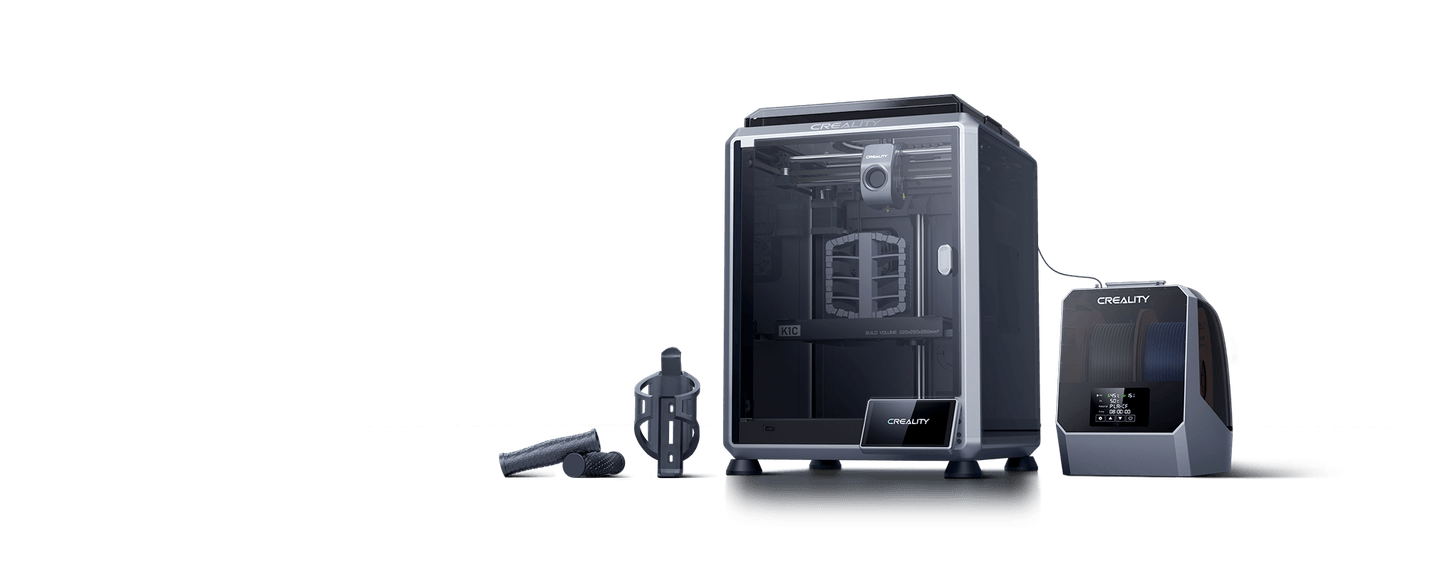 Read the reviewCreality K1CCreality's small enclosed CoreXY, rated for carbon-fiber filaments.
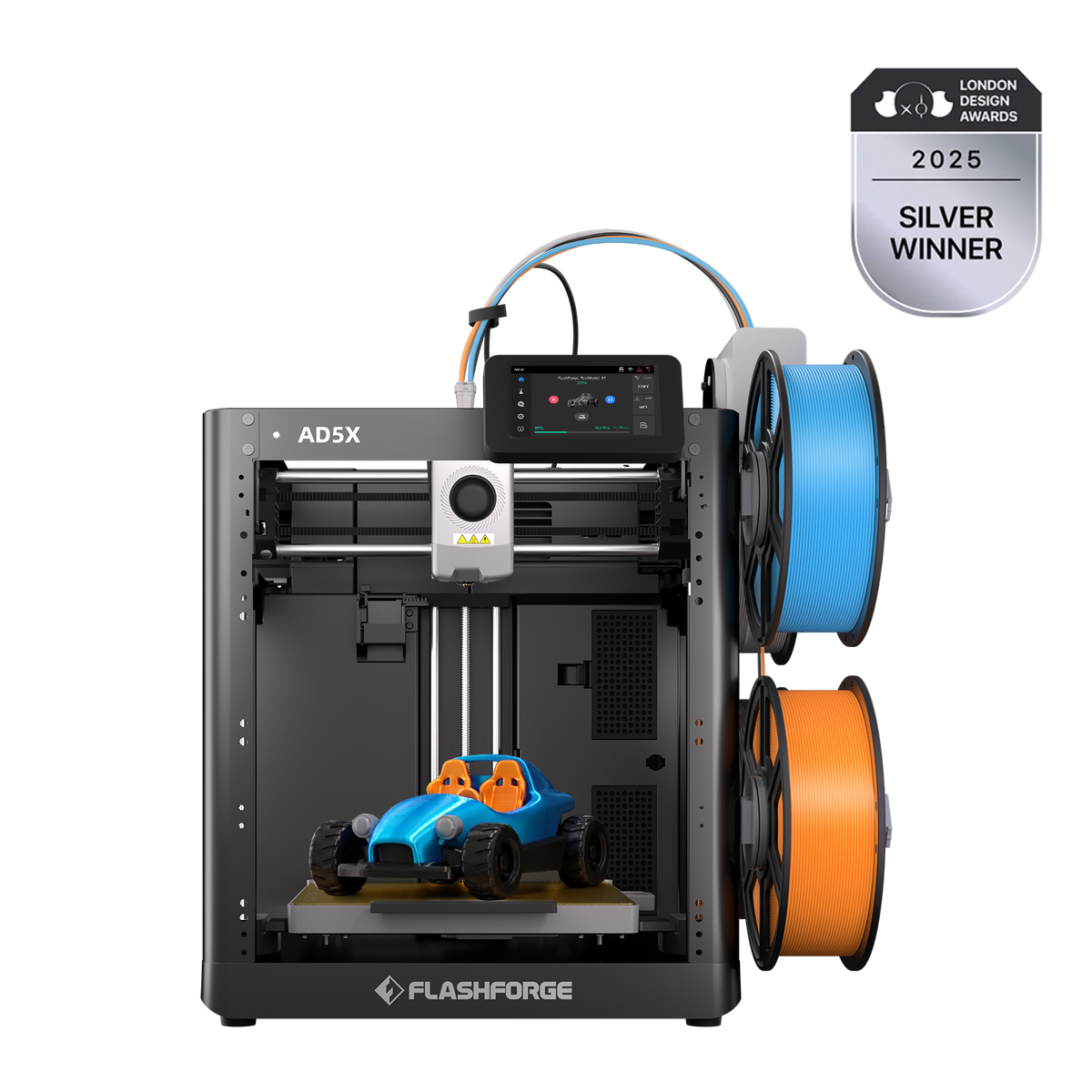 Read the reviewFlashforge AD5XFour colors in a small footprint, spools on the side.
 Read the reviewElegoo Centauri Carbon 2 ComboElegoo's second-generation enclosed CoreXY, sold with 4-color CANVAS.
How it compares
Swipe sideways to compare all 4
| Spec | Flashforge Adventurer 5M Pro | Creality K1C | Flashforge AD5X | Elegoo Centauri Carbon 2 Combo |
|---|---|---|---|---|
| Technology | FDM, CoreXY, enclosed | FDM, CoreXY, enclosed | FDM, CoreXY, open | FDM, CoreXY, enclosed |
| Build volume | 220 × 220 × 220 mm | 220 × 220 × 250 mm | 220 × 220 × 220 mm | 256 × 256 × 256 mm |
| Max speed | 600 mm/s (travel) | 600 mm/s | — | 500 mm/s |
| Max acceleration | 20,000 mm/s² | 20,000 mm/s² | — | 20,000 mm/s² |
| Max nozzle temp | 280 °C | 300 °C | 300 °C | 350 °C, hardened steel |
| Max bed temp | 100 °C | 100 °C | — | 110 °C |
| Extruder | Direct drive | Dual-gear direct drive | Direct drive | — |
| Camera | Yes | AI camera | — | — |
| Screen | 4.3" | 4.3" | 4.3" | — |
| Connectivity | Wi-Fi, Ethernet, USB | Wi-Fi, USB | USB, LAN, Wi-Fi, app | ELEGOO app, USB drive |
| Machine size | 380 × 400 × 453 mm | 355 × 355 × 482 mm | 363 × 402 × 448 mm | — |
| Bed leveling | — | Automatic | Automatic with auto Z offset | — |
| Weight | — | 12.4 kg | 11.4 kg | — |
| Multicolor | — | — | 4 colors | CANVAS, 4 colors |
| Enclosure | — | — | Open frame | Enclosed chamber with smart grille |
| Where to buy |
Frequently asked questions
What is the Flashforge Adventurer 5M Pro build volume?
220 × 220 × 220 mm, according to Flashforge.
Is 600 mm/s the real printing speed of the 5M Pro?
No. Flashforge quotes 600 mm/s as a travel speed. Actual printing speeds depend on the filament and the quality you want.
Can the Adventurer 5M Pro print nylon?
Its 280 °C maximum nozzle temperature is below what most nylon and polycarbonate filaments recommend, so it is not a good choice for them.
Is the 5M Pro quiet enough for an office?
The enclosure reduces noise and smells compared with an open printer, which makes it one of the easier machines to live with indoors. Fans remain audible during prints.
Can the 5M Pro print ABS?
Yes. ABS and ASA are within its 280 °C nozzle range, and the enclosure helps keep parts from warping; close the door and preheat the bed.
Did you test the Flashforge Adventurer 5M Pro yourselves?
No. This page is based on the manufacturer's published specifications and on public reviews, which we cite and date. If a brand lends us a unit, the page will say "Tested by the team".